Grand Marquee Club Reserve a Table
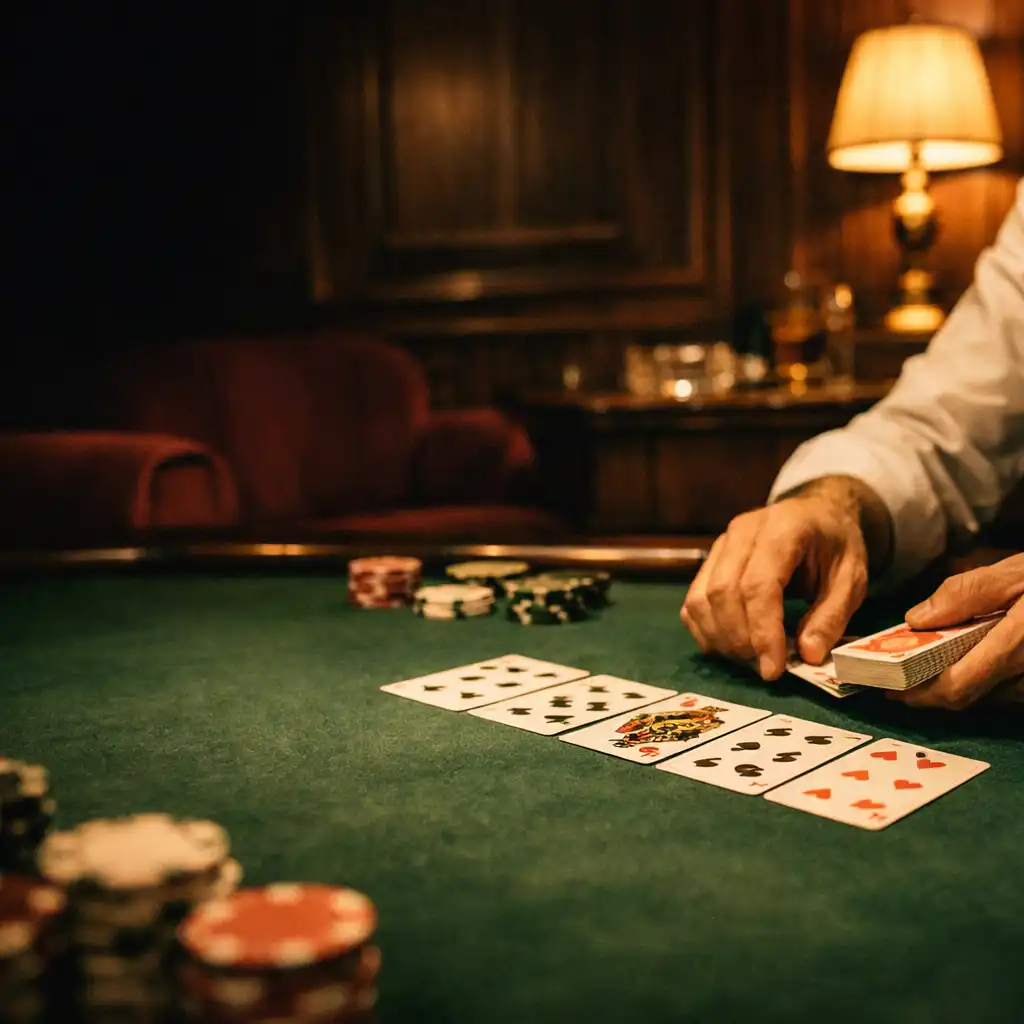
Physical playing cards and a dealer's hands on forest-green felt in the warm shadow of the card lounge.

A practical club guide

Inside the Poker Table

Physical cards, a shared felt table, and a little attention to the room are all you need to begin. This guide covers a round, hand rankings, positions, etiquette, vocabulary, and fair play for first-time and returning guests alike. Read at your own pace before a social evening, then bring curiosity to the table.

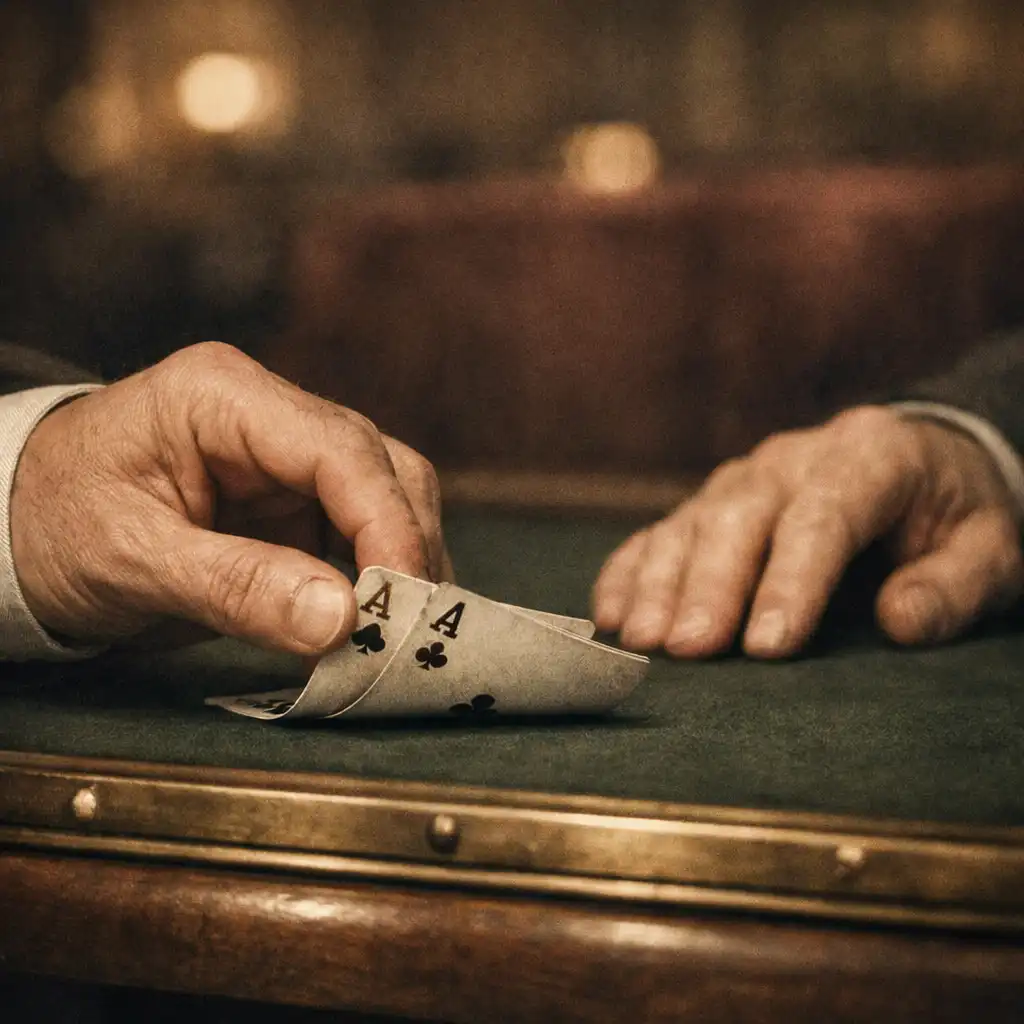
Two guests' hands carefully viewing physical cards above green felt and a walnut table edge.
A table is easiest to follow when cards, gestures, and spoken cues remain clear.

The table, in plain view

A shared table, not a screen

Offline poker unfolds in the room: cards are visible objects, cues are spoken, and each guest has a place in the rhythm. There is pleasure in noticing the felt, following the dealer, and taking turns with the people around you. Rather than racing through unfamiliar terms, let the table show you its order. Face-to-face play makes observation part of the conversation, and participation can be social, attentive, and unhurried.

The physical rhythm

Cards stay on the table unless you are carefully viewing their corners. Watch the felt, listen for the next prompt, and leave space for another guest to complete their moment. Small, calm actions make the table easy to read: keep your cards low, return them neatly, and let visible gestures match what you mean.

A club evening’s pace

Questions are welcome at a suitable pause, and it is perfectly reasonable to observe before acting. Hospitality, conversation, and respect sit alongside the game, so no one needs to perform expertise. When you are ready to see how this hosted setting comes together, explore Poker Evenings and arrive with a clearer sense of the room.

Hand rankings

Hand rankings, elegantly arranged

A hand is recognised by the relationship between its cards: matching values, a sequence, matching suits, or a combination of these patterns. Use this reference as a visual prompt rather than something to memorise all at once. The shared pace of a physical table gives you time to follow, and a host or dealer can clarify a practical question at an appropriate pause.

  1. Royal Flush

    Five cards in sequence, all of one suit, running from ten through ace. It is the highest complete sequence in this reference.

  2. Straight Flush

    Five cards in an unbroken sequence, all sharing the same suit. The cards travel together in order and in suit.

  3. Four of a Kind

    Four cards with the same value, joined by one other card. Look first for the strong pattern of four matching faces.

  4. Full House

    Three cards of one matching value and two of another. It combines a group of three with a pair.

  5. Flush

    Five cards of the same suit that do not need to be in sequence. The shared suit is the visual clue.

  6. Straight

    Five cards in a consecutive sequence, with suits allowed to differ. Read the values in order across the hand.

  7. Three of a Kind

    Three cards with the same value, accompanied by two other cards. The matching trio is the main pattern to notice.

  8. Two Pair

    Two cards of one value, two of another value, and one remaining card. Find the two matching pairs first.

  9. One Pair

    Two cards with the same value, with three other cards alongside them. It is a useful, familiar pattern to recognise.

  10. High Card

    When no other named pattern appears, the hand is read through its highest individual card and the cards that follow it.

Begin with broad patterns: matching cards, sequences, and matching suits. Familiarity grows quickly through observation, and this guide will still be here before an evening. For the wider club context, visit Offline Poker.

Dealer Private cards Shared cards
in the centre

Private cards stay close to each guest. Open cards in the centre are read together, with the dealer providing a visible cue for the table’s order.

One round, step by step

The rhythm of a round

1

Settle and receive

Take a seat with a comfortable view of the table and receive your cards in a way that keeps them private and protected. Keep them low and close to the felt, then wait for the table’s lead before making any action. Those first moments are simply about finding the room’s pace and giving yourself time to look.

2

Follow the turn

The dealer reference point and the order around the table show whose moment it is. Watch the action before speaking, then act only when it reaches you. Patience is not passive here; it is the attention that lets every guest understand what is happening without being hurried.

3

Read the shared table

Some cards are placed openly in the centre for everyone to read, while your own cards remain personal. This visible shared area gives the table a collective point of attention. Notice it, listen to the room, and let the cards on the felt make the flow easier to understand.

4

Reveal, reset, and reflect

Let the table finish a round in its own time, keep the surface orderly, and reset your attention for the next deal. Avoid rushing another guest. A completed round is a natural moment for a quiet practical question, a breath, and a return to the relaxed rhythm of the felt.

The dealer and the seats around the felt

The dealer marker is a visible point of reference for the order around the table. It is not a status symbol or a test of terminology; it simply helps guests orient themselves. At the start of a round, notice where it sits, then watch how attention moves from seat to seat. You do not need every label at once to follow the table with confidence.

Early position Middle position Late position Dealer
Seating sequence
moves around the felt

Early position describes seats that receive their turn sooner after the dealer reference point.

Middle position names the seats that sit between the earlier and later moments in the order.

Late position describes seats that receive their turn later in the sequence around the table.

Dealer is the visual anchor to notice first; it helps everyone describe where they sit relative to the order.

Position is about attention

Each seat offers a different moment to listen, observe, and respond. The most useful newcomer habit is following that order instead of rushing to master every expression. When the room is given time, the terms begin to feel descriptive rather than technical, and the table remains comfortable for everyone present.

A considerate table

Etiquette is the quiet craft of the table

Good table conduct is a form of hospitality: a collection of small actions that helps cards, conversation, and people share the same space with ease.

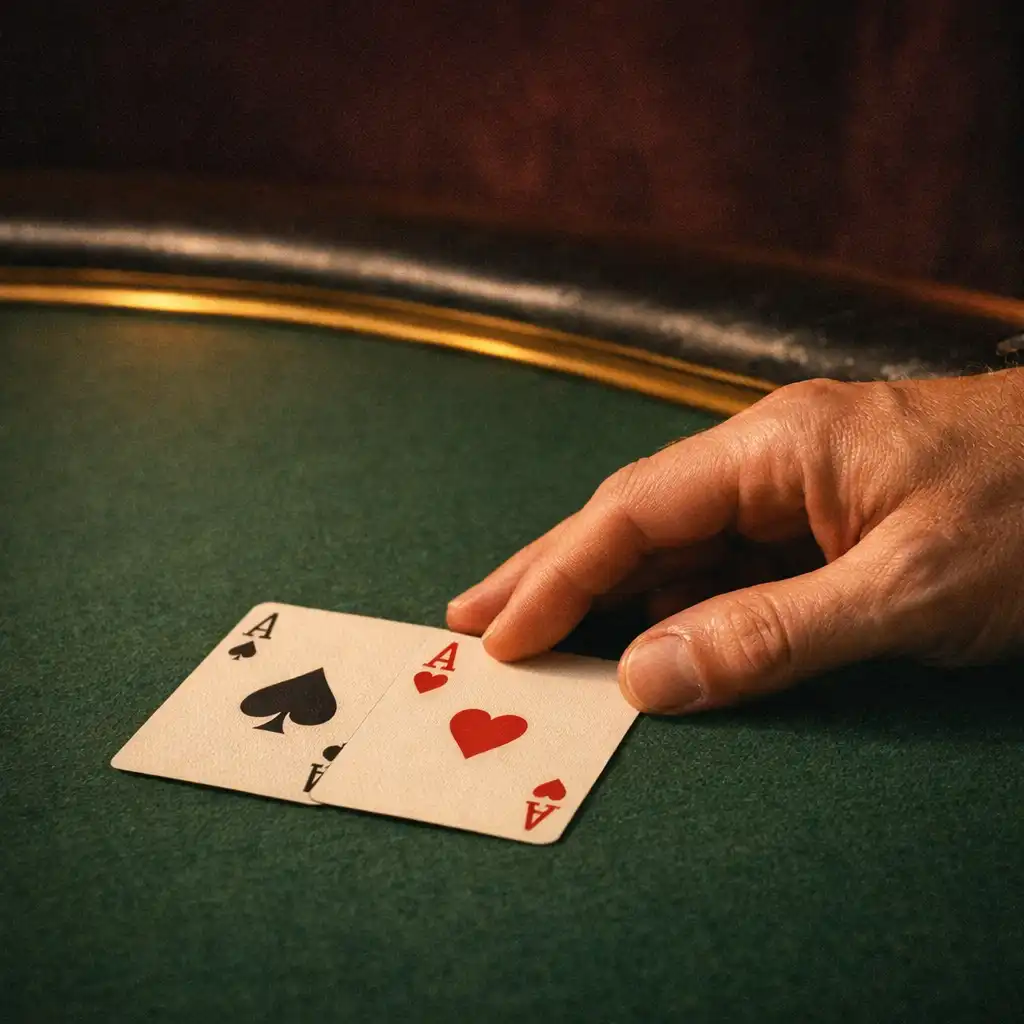
A hand placing physical playing cards neatly on forest-green felt beside an aged-brass table edge.
Care for the cards is care for the shared table.

Protect the cards

Keep physical cards on the felt, view them discreetly, and avoid bending, marking, or exposing them. Careful handling preserves everyone’s comfort and the shared condition of the table. It is a simple, friendly habit: lift only a corner when needed, keep cards close, and return them neatly when the moment has passed.

Let the turn speak

Waiting for your turn, making intentions clear, and allowing others time to decide keeps the table calm and easy to follow. If you are unsure, pause before acting and look to the dealer’s cue. Clear, courteous speech gives the room a common language without making anyone feel pressed to hurry.

Keep the table readable

Maintain a tidy personal area, keep gestures measured, and make sure cards and actions remain visible to the table. Visibility is a simple courtesy rather than a restriction. When the felt stays orderly, each guest can follow the shared sequence and enjoy the atmosphere with fewer interruptions.

Fair play is shared hospitality

Honesty, patience, and respect for the dealer and fellow guests allow everyone to enjoy the evening’s conversation and rhythm. Leave distracting commentary about an active hand for later, make space for different levels of familiarity, and remember that a thoughtful table includes newcomers as naturally as regular guests. Good company begins with giving another person room to think.

Words heard around the lounge

Vocabulary is a map, not a test

You do not need to master every term before attending. Recognising a few words simply helps you follow the room and notice what is in front of you. Listen for how the dealer and guests use them, and ask for clarification at a natural pause when something remains unclear. The language is there to make shared attention easier, not to make a newcomer feel outside the conversation.

At the table

Dealer
The person guiding the physical flow of cards and the visible order around the table.
Position
Your seat’s place relative to the dealer marker and the order in which turns arrive.
Turn
The moment when the table’s attention reaches a guest and it is appropriate for them to act.
Felt
The soft table surface where cards rest, remain visible, and are handled with care.
Shared cards
Cards placed openly in the centre for the table to read together during a round.
Private cards
The cards a guest receives and views discreetly, keeping them low and close to the felt.

In the flow of a round

Deal
The careful distribution of cards that begins or continues the visible sequence of a round.
Fold
To set your cards aside for the rest of a round, following the table’s clear order.
Reveal
The moment cards are shown at the respectful close of a round, once the table is ready.
Hand
The arrangement of cards a guest is reading, including recognised patterns such as pairs or sequences.
Showdown
The concluding moment when relevant cards are revealed and the completed hand is read by the table.

♦ Use the words gently. Clear speech, listening, and a willingness to learn matter more than perfect terminology; return to the etiquette guidance whenever you need a quiet reminder.

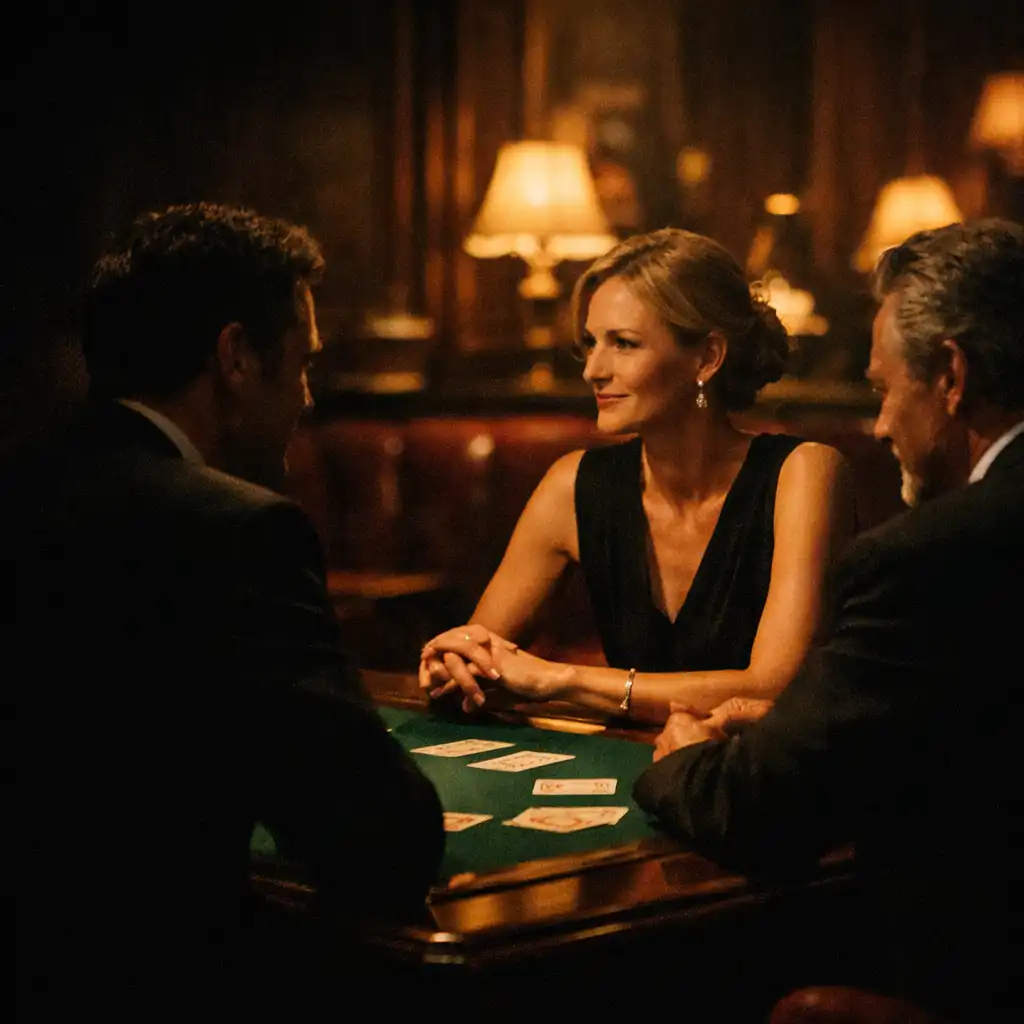
Guests in soft profile sharing quiet conversation around a physical poker table in the card lounge.
Conversation belongs between moments, with room for the felt to hold attention.

The social side of the table

A friendly table has room for conversation between moments while still giving every player space to concentrate when attention turns to the felt. Notice the room’s volume and cadence: a quieter pause can be as welcoming as a lively exchange. This small awareness is part of good company, allowing people to enjoy the evening together without pulling focus from a guest whose turn has arrived.

Make newcomers part of the evening

Experienced guests can model patience, while newcomers can observe, ask at the right pause, and participate at their own pace. Learning need not be performative; it can be shared through a clear gesture, a calm explanation, or simply a little time to watch. The card-lounge setting is made for that kind of face-to-face attention, where hospitality remains present in the details.

A table is remembered for its company: careful cards, easy conversation, and an evening given room to unfold.

A first-visit checklist

Prepare for the table with a little calm attention

  1. 1

    Read the room before the first deal

    Arrive with enough time to settle, see the table layout, and notice how the dealer guides the order. A few minutes of observation connects the round flow on this page to the real rhythm in front of you.

  2. 2

    Keep cards and the felt in view

    Handle cards carefully, keep your area orderly, and make small movements clear to those around the table. Readable table conduct is an easy expression of fair play and consideration.

  3. 3

    Follow the order, not the pressure

    Wait for your turn and take a quiet pause if you need to orient yourself. The dealer marker and the seats around the felt will help you see where attention moves next.

  4. 4

    Ask between moments

    Save questions for a natural pause or between rounds, when a brief clarification is least disruptive. It is a practical way to learn while respecting the table’s hospitable atmosphere.

  5. 5

    Choose the evening that suits your group

    For a next step, explore Poker Evenings as an individual or with friends, or visit Events & Private Gatherings when planning an occasion together.

Continue from the felt

Put the guide into context

When you are ready to see how the setting comes together, these pages offer a closer look at the club’s social evenings, physical tables, and card lounge. Each is a quiet next step from the practical ideas you have met here.

For dining before or after the table, visit Restaurant & Menu to understand the complementary side of an evening at Grand Marquee Club.

Return when the room is quiet

Table confidence grows through attention, shared courtesy, and time spent around physical cards. Revisit this guide before an evening whenever you would like a reminder of the room’s rhythm. For general planning questions, the club is ready to help you find the right next page.

Contact the Club